

New data released by the International Institute for Strategic Studies (IISS) indicate that China launched a total of 10 nuclear submarines, totaling approximately 79,000 tons of displacement, between 2021 and 2025, surpassing the United States both in number of units and in total tonnage.
According to the survey, while Beijing commissioned ten vessels during the analyzed period, the U.S. launched seven submarines, totaling around 55,000 tons.
The scenario represents a reversal compared to the 2016 to 2020 period, when China launched only three submarines (23,000 tons), compared to seven U.S. units (55,500 tons).
Expansion in Huludao boosts production
According to the IISS, China’s acceleration is directly linked to the expansion of industrial infrastructure in Huludao, the country’s main nuclear submarine construction hub. Satellite images and industrial data analyzed by the institute confirm the increase in production pace.
Recent production includes Type 094 (Jin-class) ballistic missile submarines and Type 093B cruise missile attack submarines, both built at the Huludao shipyard.
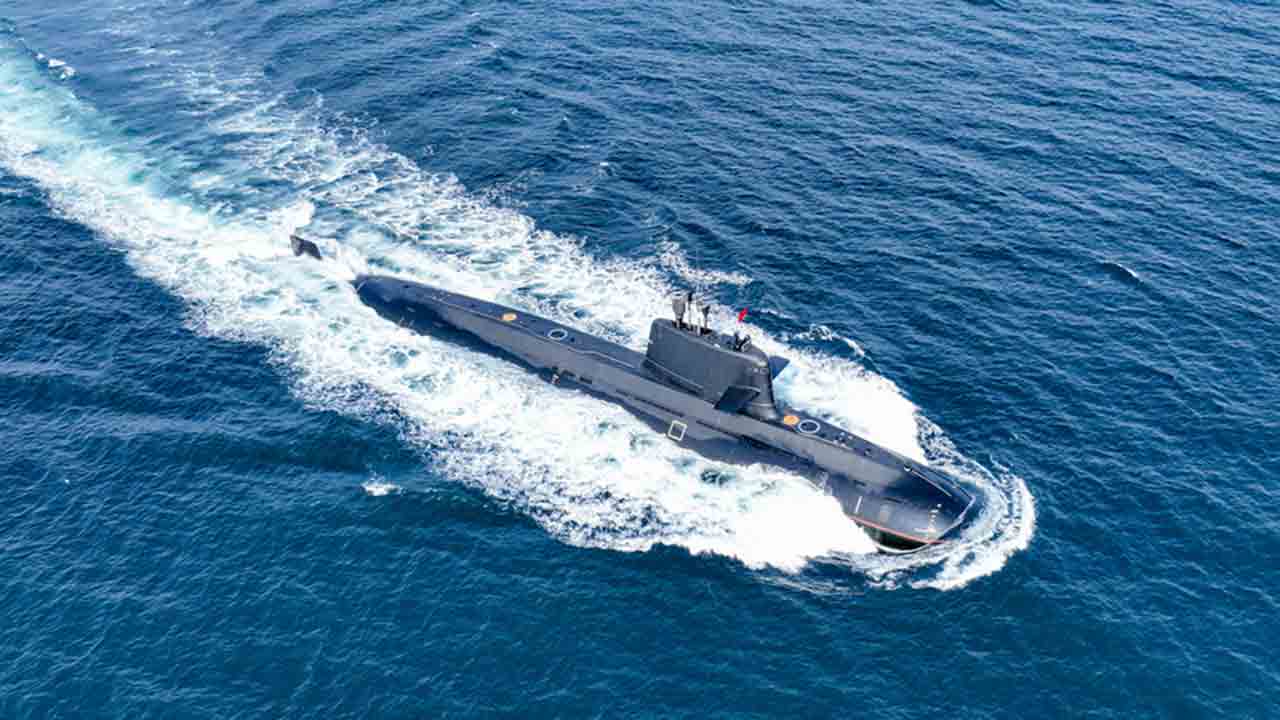
The report highlights that the current Chinese production pace is approaching the target set by the United States for 2028: one ballistic missile submarine and two attack submarines per year.
Industrial limitations in the U.S.
Meanwhile, U.S. production continues to be impacted by structural constraints, including shortages of skilled labor and bottlenecks in maintaining the existing fleet. These factors have hindered efforts to increase industrial output at American shipyards.
Despite China’s quantitative advance, the IISS notes that Chinese designs likely still lag behind U.S. and European submarines in terms of quality, onboard technology, and level of operational stealth — crucial aspects in modern submarine warfare.
Strategic impact
The rapid growth of China’s nuclear fleet reinforces the modernization of the People’s Liberation Army Navy (PLA Navy) and shifts the strategic balance in the Indo-Pacific. The expansion of sea-based deterrence capability, especially through ballistic submarines, strengthens China’s nuclear triad.
The trend observed between 2021 and 2025 indicates that Beijing not only expanded its production but consolidated an industrial base capable of sustaining a high pace in the coming years — a movement closely monitored by Washington and its allies.
Source and images: IISS News (@IISS_org) | chinamil.com.cn. This content was created with the help of AI and reviewed by the editorial team.
China has significantly increased its nuclear-powered-submarine production rate over the last five years (2021–25) while at the same time expanding its shipbuilding facilities.
While Chinese designs almost certainly lag behind US and European boats in terms of quality, the… pic.twitter.com/KNr7sONNcw
— IISS News (@IISS_org) February 22, 2026
